A powder coating system earns its place on the shop floor by moving real parts through production without creating avoidable delays. Capacity tells only part of that story because booth airflow, oven performance, conveyor timing, pretreatment, and utilities all affect how smoothly the line operates. Layout decisions matter just as much, especially for manufacturers comparing powder coating equipment that needs to handle today’s workload without becoming a problem as production changes.
Content Summary
Oven Size and Capacity Matched to Your Largest Parts
Oven dimensions should start with the largest parts a shop expects to process regularly, including the racks, hooks, carts, or carriers used to move them. Sizing must leave enough clearance for heated air to circulate around the load rather than packing parts tightly against walls or neighboring pieces. Oversizing can create its own problems because a large empty chamber occupies valuable floor space and may require more energy to operate than the workload justifies. For manufacturers comparing Reliant powder coating ovens, usable interior dimensions, door clearance, batch weight, and expected loads per shift are more meaningful than chamber volume by itself.
Booth Airflow and Filtration for Clean, Consistent Coverage
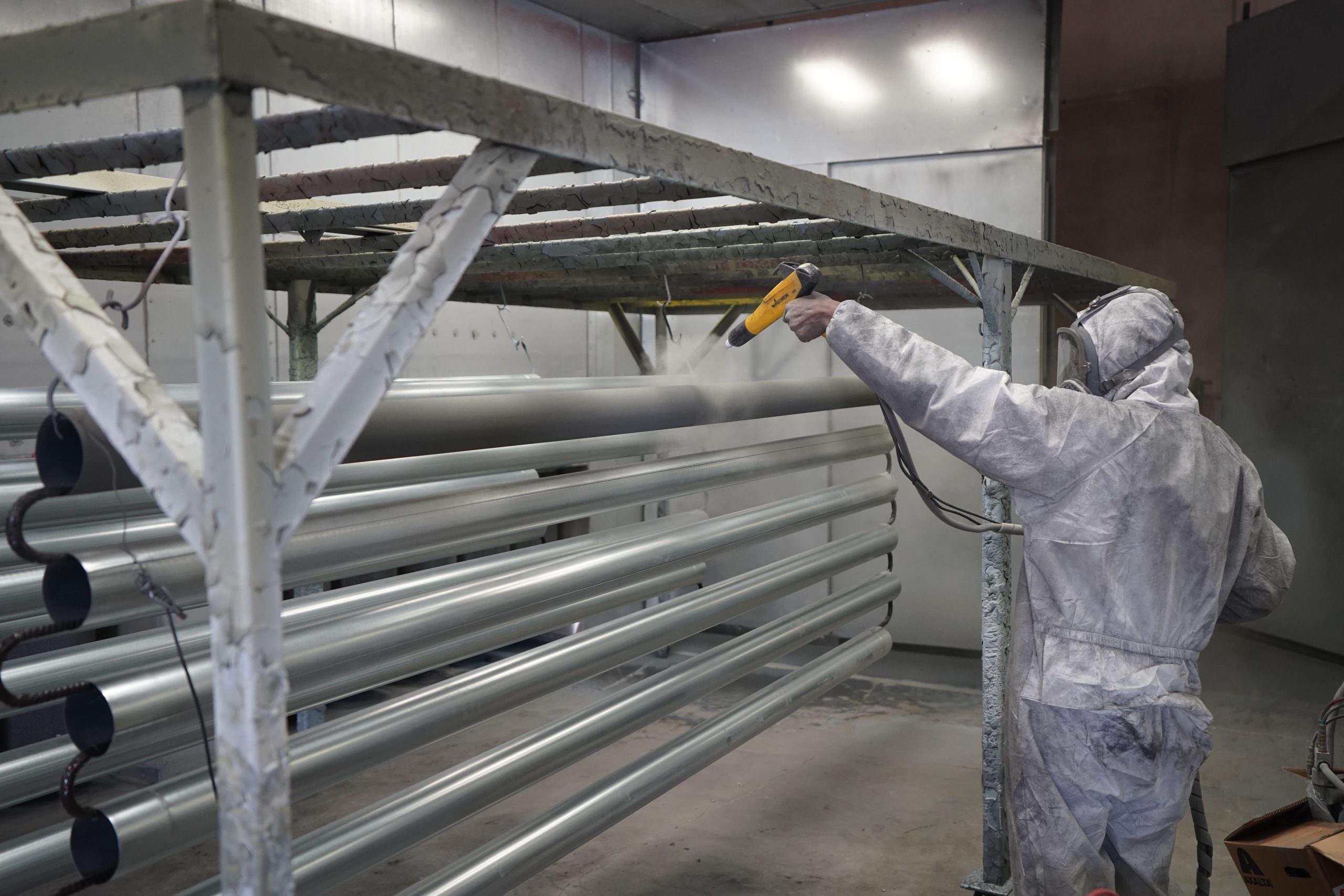
Booth airflow controls how overspray moves away from the application area and toward the filtration system. Stable air movement helps operators see the work clearly while limiting powder accumulation that could interfere with clean application. Poor airflow can disturb the powder cloud, increase housekeeping demands, or allow overspray to settle where it does not belong.
Filtration capacity needs to match both booth design and the amount of powder being sprayed during normal production. Clean filters help maintain predictable airflow, while clogged media can gradually change booth performance even if gun settings remain untouched. Reliant powder coating systems can support businesses that want application and filtration equipment planned around production volume instead of treating the booth as a simple enclosure.
Spray Gun Type and Voltage Control for Even Film Build
Spray equipment affects transfer efficiency, coverage, and the ability to coat recessed or complex surfaces. Voltage settings influence the electrostatic field between the gun and grounded part, so more power is not automatically better for every shape. Application around corners, cavities, and tight geometry may require different settings than broad flat panels because excessive charge can make powder resist entering recessed areas. Proper gun selection within a Reliant powder coating equipment package gives operators better control over powder delivery while helping the business maintain repeatable film thickness across changing products.
Conveyor Speed and Line Layout for Steady Throughput
Conveyor speed establishes how long parts spend in each stage of a continuous line, making it closely tied to pretreatment exposure, booth application time, oven dwell, and cooling. Faster movement increases potential output only if every process can keep pace with the new rate. Spacing between carriers also matters because crowded parts can restrict spray access or airflow inside the oven.
Line layout should reduce unnecessary turns, transfers, and staging wherever the building allows. Bottlenecks often appear where a conveyor feeds equipment faster than that equipment can process the load, particularly at curing or manual inspection points. Well-matched Reliant powder coating equipment for sale can help manufacturers plan capacity around actual line speed rather than buying individual machines with impressive ratings that do not work together efficiently.
Pretreatment Stage Compatibility, from Wash to Rinse to Dry-off
Pretreatment prepares the substrate for coating, and weak preparation can undermine an otherwise well-controlled finishing line. Wash chemistry, rinsing, water quality, drainage, and drying all need to suit the metal and contamination found on incoming parts. Dry-off performance deserves particular attention because trapped moisture in seams, tubes, or recessed areas can create defects once powder is applied and heated. Compatibility between pretreatment and Reliant powder coating equipment helps businesses keep surface preparation from becoming the hidden variable behind adhesion problems, rejects, and repeated rework.
Cure Temperature Range and Heat-up Time for Your Powder Chemistry
Powder chemistry determines the temperature and time needed for the coating to develop its intended properties. Different formulations can have different cure schedules, while part thickness changes how quickly the substrate actually reaches that temperature. Reliable Reliant powder curing ovens give manufacturers a way to select heating performance around the powders and metal loads they process instead of relying only on the oven-air setpoint.
Heat-up time becomes especially important with thick steel, castings, dense racks, and other loads that absorb substantial energy before reaching the required part-metal temperature. Heavy components can remain below the cure range even after chamber air appears fully heated, which is why production planning should account for thermal mass. Selected correctly, a Reliant industrial powder coating oven can help a shop handle demanding loads without making every cycle longer simply to compensate for uncertain heating performance.
Utility Demands, Including Gas, Electric, and Compressed Air Quality
Utilities determine whether a finishing system can actually deliver the performance listed on its equipment specifications. Gas supply must support burner demand, electrical service has to cover fans, controls, application equipment, and supporting machinery, and compressed air should remain clean and dry enough for powder delivery and filter-cleaning functions. Electrical upgrades or undersized gas lines discovered after equipment arrives can turn a straightforward installation into an expensive facility project. Compressed air containing excess moisture or oil can also create application and maintenance problems that appear to be equipment faults when the real issue starts upstream.
Reliant Finishing Systems can be useful to manufacturers at the point where these separate requirements have to become one workable line, particularly when oven capacity and package configuration need to fit existing plant utilities. Rather than selecting a curing oven first and solving the surrounding limitations afterward, shops can consider Reliant powder coating equipment alongside oven heat demand, booth airflow, conveyor pace, pretreatment capacity, and available services, giving the final equipment package a better chance of fitting the building and the production schedule from day one.