
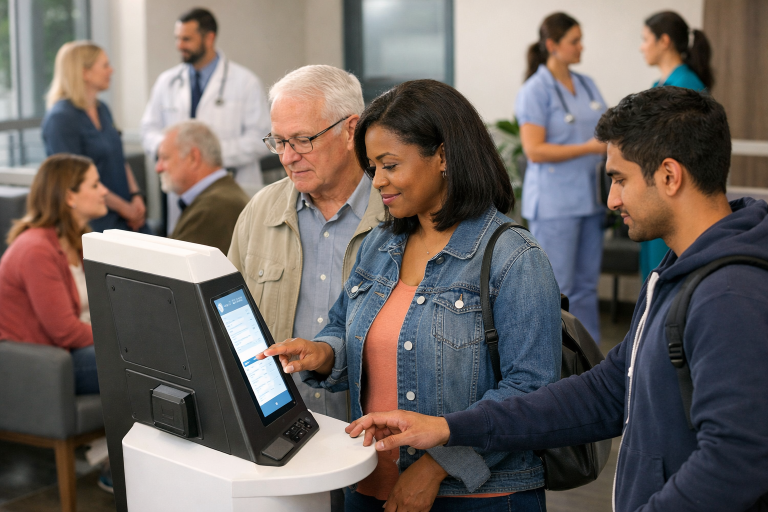
In the rapidly evolving landscape of healthcare, patient self-service kiosks have emerged as a transformative solution for both patients and providers. These interactive stations are reshaping how medical facilities operate by streamlining administrative processes, enhancing the overall patient journey, and optimizing operational workflows. Offering a convenient and intuitive option for a variety of tasks, self-service kiosks help bridge gaps in efficiency and patient engagement. For a closer look at technology-driven improvements in medical environments, KIOSK healthcare solutions demonstrate the potential of this innovation in real-world contexts.
By integrating self-service terminals into clinics and hospitals, organizations are investing in more efficient and patient-centered care models. Patients can now independently manage essential tasks such as checking in, updating medical forms, and making payments, which reduces burdens on staff and enables more focused attention on care delivery.
Furthermore, the adoption of these kiosks signifies a broader commitment within the healthcare sector to digital transformation and modernization. As patient needs and expectations continue to evolve, healthcare providers are challenged to deliver faster, more precise, and satisfying service experiences. This is precisely where self-service solutions show their true value.
The effectiveness of these implementations is not just anecdotal; many credible sources have documented significant improvements in service speed and patient satisfaction tied directly to kiosk deployment.
Content Summary
Enhancing Patient Experience
Self-service kiosks empower patients by allowing them to take control of their healthcare-related tasks in a confidential and user-friendly manner. Functions such as check-ins, form completion, and updating personal information can be accomplished quickly and privately. This autonomy reduces dependency on front desk staff and empowers patients, leading to greater satisfaction and a sense of agency in their own care. The ability to engage with kiosks in multiple languages and with accessibility features further ensures an inclusive experience.
Additionally, many kiosks are now equipped with touchscreen interfaces that offer audio guidance and adjustable font sizes, making them accessible to visually impaired or elderly patients. As hospitals strive to create a welcoming and dignified environment, such accessibility features are pivotal. Patients who may experience social anxiety or language barriers can interact directly with the technology, increasing their comfort and breaking down communication challenges that could otherwise deter them from seeking timely care. This personalized experience is further tailored with features like appointment reminders, wayfinding instructions, and the ability to schedule follow-up visits, making each encounter with the healthcare system smoother and more reassuring.
Reducing Wait Times
Kiosks automate routine processes and significantly decrease the time patients spend waiting. For instance, the Cleveland Clinic’s installation of more than 150 self-check-in kiosks across its locations led to a 37% reduction in average wait times. With routine paperwork and check-ins completed digitally, patients move through the system faster and providers can stay on schedule. According to Forbes, automation in healthcare settings is linked to more streamlined visits and higher provider throughput.
Moreover, integrating kiosks with queue management systems can provide real-time updates to patients about their expected wait, decreasing anxiety and increasing satisfaction. By giving patients transparency into their expected wait time and allowing them to spend it comfortably, perhaps reviewing educational content or tending to personal matters, the perceived delay is reduced, improving their overall experience. Providers also benefit from better distribution of patient flow, minimizing bottlenecks and unexpected delays in busy or high-traffic departments.
Improving Data Accuracy
When patients handle their own intake processes at kiosks, the risk of transcription errors by staff is reduced. Self-service entry allows for accurate recording of personal, insurance, and clinical data, which is critical to delivering safe and effective care. Up-to-date information flows directly into electronic health record systems, minimizing communication gaps and potential delays caused by administrative errors.
Data validation routines built into kiosk software can prompt users if required fields are incomplete or if there are inconsistencies, resulting in cleaner records. This is especially crucial for facilities managing large patient volumes, as even small errors at intake can have cascading effects on care quality and billing. Advanced kiosks may also incorporate document scanners for insurance cards and IDs, further reducing human error and expediting the registration process. These improvements drive not only clinical accuracy but also ensure more reliable data for reporting, compliance, and operational decisions.
Streamlining Payment Processes
Many kiosks are equipped with secure payment systems that simplify transactions. Patients can quickly settle co-pays or outstanding balances, reducing bottlenecks at billing desks and ensuring a smoother revenue cycle for providers. This digital approach not only benefits facilities by increasing payment collection rates but also contributes to a more discreet and comfortable patient experience.
Digital receipts and options to set up payment plans directly at the kiosk enable patients to review and manage their financial responsibilities in detail, empowering them to make more informed decisions. Integration with various payment options, including credit, debit, and contactless payments, gives patients flexibility and can reduce barriers to payment completion. These advances often accelerate check-out times and lower the administrative workload for billing staff, who may otherwise need to handle payment disputes or missed collections in person.
Supporting Staff Efficiency
Administrative staff in medical offices often face high volumes of repetitive tasks. By shifting responsibilities like check-ins and bill collection to kiosks, staff members are freed up to dedicate more time and attention to patient care and support. This shift not only boosts staff job satisfaction but also translates to better service delivery. Hospitals and clinics have reported an improvement in overall morale and performance following kiosk adoption.
Furthermore, streamlined workflows mean staff can be redeployed to roles that provide greater value, such as patient navigation, care coordination, or assisting those who need special attention. As routine bottlenecks disappear, clinics can often function with leaner staffing models during low-volume periods or reallocate resources to growing service lines. This operational flexibility is crucial for healthcare providers seeking to optimize budgets while maintaining or improving the quality of care delivered.
Facilitating Preventive Care
Modern kiosks provide patients access to health assessments, risk screenings, and educational resources while they wait for appointments. These tools can prompt discussions with healthcare providers and support adherence to preventive care guidelines. Encouraging patients to consider routine screenings or vaccinations can lead to earlier detection of diseases and improved population health outcomes.
Patient education modules available on kiosks often use engaging visuals and tailored messaging, making health concepts more accessible and actionable for diverse audiences. In some locations, kiosks also offer wellness programs or behavioral health screenings, helping patients connect with care they might not have otherwise pursued. These insights can serve as conversation starters during appointments and contribute to personalized care planning. Ultimately, integrating preventive care at the point of check-in harnesses teachable moments and places actionable health information directly into patients’ hands.
Case Studies
Several leading healthcare institutions have experienced notable improvements after integrating self-service kiosks:
- Boston Medical Center: By implementing digital kiosks for patient check-in, the center saw increased operational efficiency and improved patient satisfaction scores.
- Montefiore Medical Group: The deployment of self-service kiosks in select waiting rooms led to a smoother check-in process for patients and optimized the use of staff time.
- Houston Methodist: After adopting kiosks for bill payment and form completion, the hospital system reported a decrease in billing errors and an uptick in timely collections. Patient feedback indicated greater satisfaction with shorter wait times and clear, step-by-step instructions for system use.
In each of these cases, the seamless integration of kiosk technology relied on thoughtful planning, staff training, and ongoing refinement of workflow. Collecting feedback from both patients and staff proved vital to ensuring that kiosks deliver consistent value and adapt to evolving clinical and administrative requirements.
Conclusion
Patient self-service kiosks are revolutionizing healthcare delivery by reducing administrative friction, improving patient and staff experiences, and supporting the transition to digital operations. These technologies promote efficiencies that benefit providers and patients alike while contributing to higher satisfaction scores and better care outcomes. As the healthcare industry continues to modernize, the role of self-service solutions will only grow in significance for organizations seeking to remain competitive and deliver advanced, patient-centered care.
Looking to the future, continued innovation in kiosk design and integration with telehealth systems, artificial intelligence, and mobile platforms will further enhance their capacity to serve diverse patient populations. As public health challenges mount and consumer expectations rise, investment in user-friendly, adaptable technology like self-service kiosks will remain central to driving sustainable improvements in healthcare access and quality. Ultimately, the shift toward convenient, efficient, and empowering patient experiences has the potential to transform not just workflows, but the culture of healthcare itself.